How to Choose Hypoallergenic Flowers (Without Sacrificing Beauty)
You want to send someone flowers. Beautiful, generous, stop-them-in-their-tracks flowers. But there's a problem. They sneeze at pollen the way most people sneeze at pepper. Or maybe it's you. Maybe you love the idea of fresh flowers in your home but the reality involves itchy eyes, a running nose, and a box of tissues that empties faster than the vase fills.
Here's the good news. You don't have to choose between beautiful flowers and breathing comfortably. Plenty of stunning, luxurious blooms produce little to no airborne pollen, and once you know which ones to reach for (and which to avoid), you can enjoy fresh flowers without a single antihistamine.
Why Some Flowers Trigger Allergies and Others Don't
It's not the flowers themselves that cause the problem. It's the pollen, and more specifically, how that pollen travels.
Some plants rely on wind to carry their pollen from one flower to another. These are the troublemakers. Their pollen is light, fine, and designed to float through the air in enormous quantities. When it lands in your nose or eyes, your immune system treats it as an invader and responds with all the familiar symptoms: sneezing, watering eyes, congestion, and that maddening itch at the back of your throat.
Other plants rely on insects to do the job instead. Bees, butterflies, and other pollinators carry the pollen directly from flower to flower, which means the plant doesn't need to launch it into the air. These flowers tend to produce pollen that's heavier, stickier, and far less likely to become airborne. Some produce hardly any pollen at all.
That's your shortcut. Flowers with heavy, sticky pollen or very low pollen production are the ones that won't cause problems. Flowers with light, abundant, airborne pollen are the ones to avoid.

The Best Hypoallergenic Flowers for Allergy Sufferers
These are the stems we recommend whenever someone tells us they're buying for a person with hay fever or pollen sensitivity. Every one of them is beautiful, widely available, and unlikely to cause a reaction.
Roses
The best news first. Roses are one of the most hypoallergenic flowers you can buy.
Their pollen grains are large and heavy, far too big to become airborne under normal conditions. The layered petals also act as a natural barrier, keeping the pollen tucked deep inside the bloom where it stays put. You could have a dozen roses on your bedside table and your nose would never know the difference.
Garden roses, with their densely packed petals, are an especially safe choice. More petals means more protection. And since roses are available year-round in almost every colour imaginable, they're the easiest starting point for any allergy-friendly bouquet.
One note: roses do have a strong fragrance, and some people with scent sensitivities (which is different from a pollen allergy) may find heavily perfumed varieties irritating. If that's a concern, ask your florist for a less fragrant variety. They exist and they're just as beautiful.
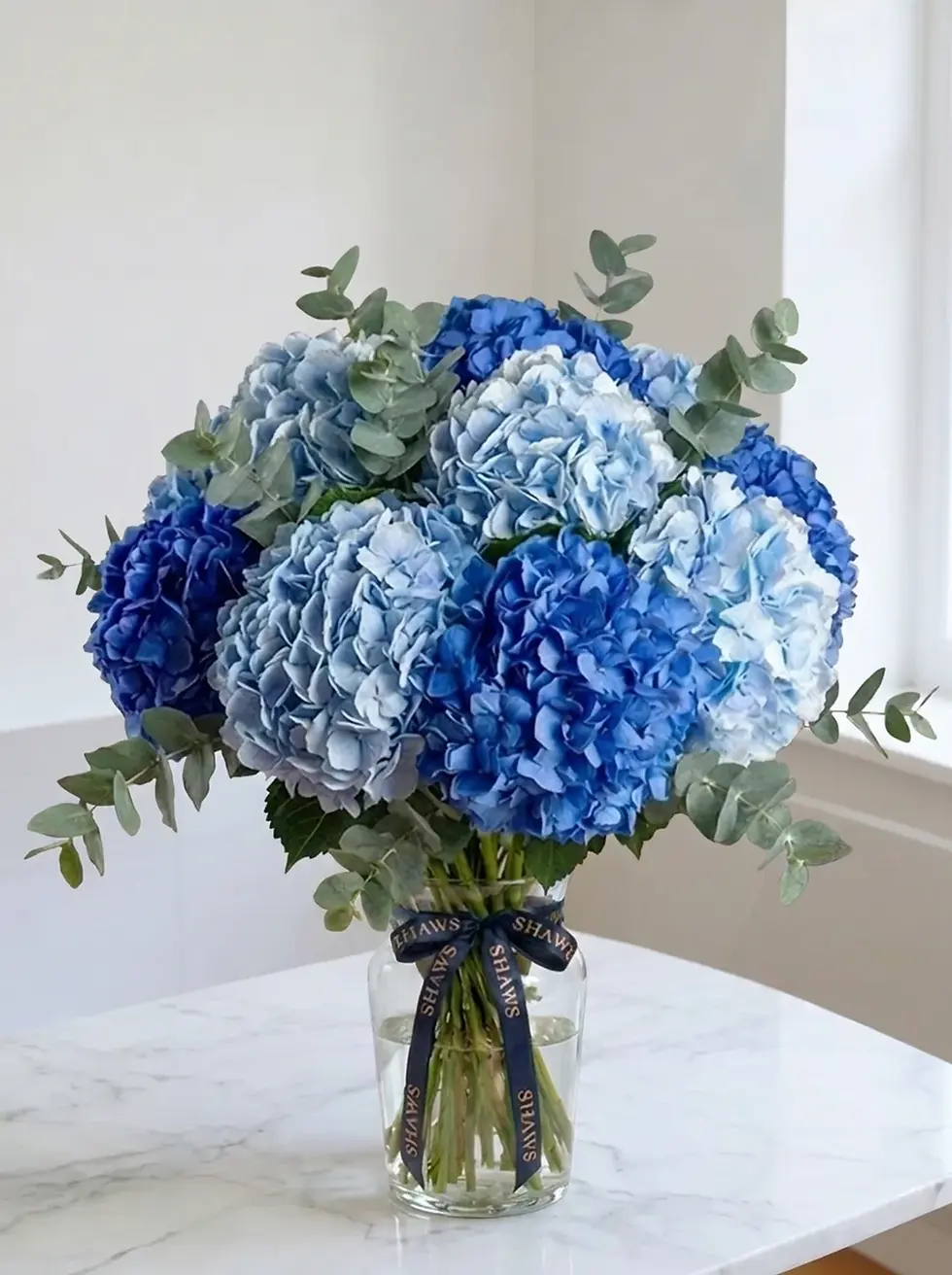
Hydrangeas
Big, cloud-like heads in blues, pinks, greens, and whites, and almost entirely allergy-friendly. Hydrangea pollen is sticky and stays on the flower rather than drifting into the air. They're also one of the most voluminous flowers available, which means a single stem fills a vase the way five or six smaller flowers would.
Brilliant for table arrangements, home displays, and anyone who wants maximum visual impact with minimum allergy risk.
Tulips
A classic spring flower with a naturally low pollen count. Tulips are clean, elegant, and about as safe as cut flowers get for allergy sufferers. They come in virtually every colour and their smooth, simple structure means there's nowhere for pollen to hide and accumulate.
One practical tip: some people with sensitive skin can develop a mild contact rash from handling tulip stems. This is a skin sensitivity, not a pollen allergy, but it's worth knowing. If you're arranging them yourself, gloves solve the issue completely.
Orchids
Exotic, long-lasting, and producing almost no pollen at all. Orchids are one of the safest flowers for allergy sufferers, full stop. The pollen they do produce is sticky and compact, packaged into tight bundles that insects carry away rather than the wind.
Phalaenopsis orchids (the ones you see most often in shops) are virtually scent-free as well, which makes them a double win for anyone with both pollen and fragrance sensitivities. They also last for weeks, which is remarkable value.
Peonies
Lush, romantic, and surprisingly allergy-friendly. Peonies produce very little pollen, and what they do produce stays trapped deep within those dense, ruffled layers of petals. Double-flowering varieties are the safest choice because the extra petal layers create an even more effective barrier.
The caveat: peony season is short, running from late April through mid-June. But if your timing lines up, they're one of the most beautiful low-pollen flowers available.
Snapdragons
An underrated choice that deserves more attention. Snapdragons have a clever structure. Their flowers are essentially sealed pouches that only open when an insect lands on them and pushes its way inside. The pollen stays locked within the bloom unless mechanically forced open, which means it never becomes airborne under normal household conditions.
They add height, colour, and a playful architectural quality to mixed arrangements. Available in pinks, reds, yellows, oranges, and whites.
Carnations
Unfairly overlooked by some, but a genuinely excellent choice for allergy sufferers. Carnations have a complex, multi-layered petal structure that keeps their stamens (and any pollen) tucked well out of reach. They're also one of the longest-lasting cut flowers available, easily holding for two to three weeks with proper care.
Modern carnation varieties come in rich, sophisticated colours that look nothing like the cheap garage-forecourt bunches people sometimes associate them with. Deep burgundy, dusky pink, soft peach, and crisp white carnations are all beautiful in a well-designed bouquet.
Irises
Elegant, architectural, and low-pollen. Irises produce heavy pollen that stays locked deep within their long, curved petals. It rarely becomes airborne, making them a safe choice for most allergy sufferers. They come in stunning blues, purples, yellows, and whites and add a striking focal point to any arrangement.

Flowers to Avoid If You Have Pollen Allergies
Just as important as knowing what to choose is knowing what to skip. These flowers are beautiful but they're the most common allergy triggers in cut flower arrangements.
Lilies (with Exposed Stamens)
Lilies are gorgeous but their large, pollen-heavy stamens are a serious problem for allergy sufferers. Brushing past a lily can release clouds of fine pollen that settles on surfaces and hangs in the air. The pollen also stains clothing, furniture, and skin on contact.
There is a workaround. If you love lilies, ask your florist to remove the stamens before the flowers open fully. This eliminates the pollen source entirely. It's a simple step that takes seconds and many florists do it as standard practice. Alternatively, Asiatic lily hybrids are bred to be pollen-free and are a safer choice.
Daisies and Gerberas
Members of the aster family, and prolific pollen producers. Their wide, open centres are essentially landing pads for pollen that becomes airborne easily. Beautiful flowers, but best avoided if allergies are a concern.
Chrysanthemums
Another aster family member with high pollen output. They're extremely popular in autumn arrangements and they last brilliantly, but they're one of the more likely flowers to trigger a reaction in sensitive people.
Sunflowers
Those big, cheerful heads are also big pollen producers. Standard sunflowers have exposed centres packed with pollen that sheds easily. Some newer "pollen-free" sunflower varieties exist and they're a better option, but if you're buying for someone with serious allergies, there are safer choices on the list above.
Baby's Breath (Gypsophila)
Commonly used as a filler flower in mixed bouquets. It looks light and innocent but it can trigger reactions in some allergy sufferers. If you're building an allergy-friendly arrangement, ask your florist to substitute eucalyptus, pittosporum, or ruscus as alternative foliage.

How to Build an Allergy-Friendly Bouquet That Still Looks Stunning
Choosing hypoallergenic flowers doesn't mean settling for a bland, limited arrangement. Some of the most luxurious bouquets you'll ever see are built entirely from low-pollen flowers.
Start with roses as your anchor. They're hypoallergenic, available year-round, and come in enough colours and varieties to suit any mood or occasion.
Add hydrangeas for volume. A single stem fills space beautifully and keeps the arrangement generous without adding any allergy risk.
Use peonies or tulips as a seasonal hero. Peonies in late spring and early summer, tulips from March through May. Both are low-pollen and both bring something special.
Build height with snapdragons or stocks. These add vertical energy and texture while keeping the pollen safely contained.
Choose foliage carefully. Eucalyptus is an excellent choice because it's aromatic without producing problematic pollen. Pittosporum and ruscus are also safe and add beautiful green depth. Avoid ornamental grasses and anything with visible fluffy seed heads.
Tell your florist. This is the most important step. If you mention allergies when ordering, a good florist will automatically exclude high-pollen flowers and build the arrangement around safe alternatives. You don't need to memorise every flower on this list. Just say the word and we'll handle the rest.

Extra Tips for Enjoying Flowers with Allergies at Home
Even with hypoallergenic flowers, a few small habits can make the experience even more comfortable.
Change the water every two days. Old water can develop mould, which is a separate allergen that affects some people. Clean water keeps everything fresher and cleaner.
Keep flowers in well-ventilated rooms. A stuffy bedroom with the windows shut concentrates any trace allergens. A living room with some airflow dilutes them to nothing.
Wipe down surfaces around the vase. Even low-pollen flowers can shed a tiny amount. A quick wipe of the table or shelf once a day keeps things spotless.
Remove flowers as they fade. Wilting flowers release more particles than fresh ones. Taking out spent stems promptly keeps the arrangement healthy and the air cleaner.
Consider the vase location. Keeping flowers a few feet away from where you sleep or work is a sensible precaution for anyone with moderate sensitivities, even when using hypoallergenic varieties.

Order Allergy-Friendly Flowers from a Covent Garden Florist Who Understands
We get asked about allergies more often than you might think. Parents ordering for children with hay fever. Partners who love flowers but can't tolerate lilies. Offices where one person's pollen sensitivity means the whole reception desk goes flower-free.
It doesn't have to be that way.
Tell us about the allergy and we'll build something beautiful around it. Every bouquet we make is hand-tied using fresh seasonal stems sourced from the market that morning, and we're completely comfortable designing arrangements that are gorgeous, generous, and safe. Roses, hydrangeas, peonies, tulips, orchids, snapdragons, some of the most stunning flowers in the world happen to be the most allergy-friendly, and we work with all of them daily.
Same-day delivery is available across Central London, and every bouquet arrives gift-wrapped and standing in water. Just mention allergies when you order and we'll take care of everything else.

Comments